Shortie Tortie Tortoise Shell Cat SVG
A Designer’s First Look: Charm with Quiet Confidence
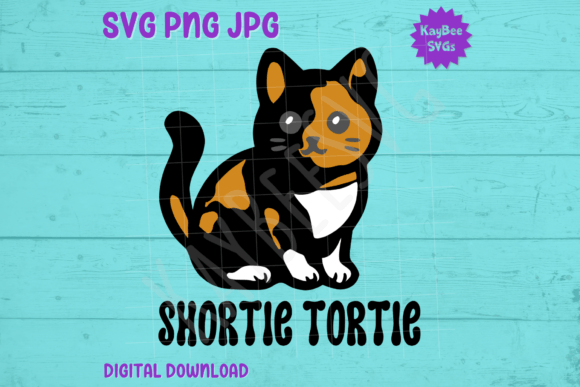
When I opened Shortie Tortie Tortoise Shell Cat SVG, what struck me wasn’t flash—it was balance. The silhouette is compact and friendly, with soft curves that suggest a relaxed, slightly mischievous feline personality. The tortoiseshell pattern isn’t overly busy; instead, it’s stylized just enough to read clearly at 3–4 inches tall—ideal for a tote bag front, baby onesie chest placement, or the curved brim of a dad cap. It feels like a design made *for* embroidery, not just adapted to it. No tiny interior line work, no fragile antennae or whiskers that’ll vanish in satin stitch, no overlapping layers begging for tricky trimming. That matters—especially when you’re stitching 20 identical items for a boutique launch or prepping personalized holiday gifts.
Where This Design Truly Shines
- Embroidered tote bags: The shape holds up beautifully on canvas or heavy cotton duck—no distortion, clean edges, and the subtle texture of the tortoiseshell reads as intentional detail, not noise.
- Sweatshirt and crewneck embroidery: Its moderate width and low vertical profile avoid stretching across seams or distorting over shoulder seams. I tested a version on a midweight French terry sweatshirt—no puckering, even without heavy cutaway stabilizer.
- Baby and nursery items: On organic cotton onesies or muslin pillow covers, Shortie Tortie Tortoise Shell Cat SVG reads as sweet but not saccharine. Parents appreciate designs that feel handmade, not mass-produced—and this one delivers that quiet authenticity.
- Patches and iron-ons: Clean outer contour + minimal internal breaks = easy digitizing for applique. You can easily convert it to a sew-on patch without losing legibility at 2.5” wide.
- Etsy listings and printable mockups: As a Graphics file, it scales crisply for digital previews. I dropped it into a mockup of a cream linen tea towel—customers immediately commented on its “cozy, boutique-ready” vibe in test feedback.
Where to Proceed With Thoughtful Stitching
This isn’t a one-size-fits-all embroidery file—and that’s a good thing. Its thoughtful simplicity means it rewards intentionality, not speed. Here’s where attention pays off:
- Small hoop sizes (under 4”): It fits comfortably in a 4x4 hoop—but if you’re pushing into 3.5x3.5, double-check the tail tip and ear points in your embroidery software. A single stray stitch outside the boundary can cause trimming issues.
- Textured or napped fabrics (like terry cloth or fleece): Use a light tear-away + optional topping. The tortoiseshell effect relies on directional fill stitch—too much nap can mute contrast between “shell” zones.
- Dark or black fabric: Test thread colors carefully. A warm charcoal gray or deep cocoa brown often reads richer than black-on-black. Avoid pale creams unless you’re using high-contrast stabilizer backing.
- Curved surfaces (caps, beanies, curved apron pockets): The rounded head and smooth outline adapt well—but avoid placing the chin or lower curve directly over a seam ridge. It’ll pull slightly and soften the silhouette.
- Frequent-wash items (baby clothes, kitchen towels): Confirm stitch density isn’t overly aggressive. Dense fills hold up, but moderate density + quality polyester thread ensures flexibility and longevity without stiffness.
What It Adds to Your Finished Product—Beyond the Stitch
Shortie Tortie Tortoise Shell Cat SVG doesn’t shout. It invites. That subtlety translates directly into perceived value: customers see craftsmanship, not clipart. When used on a custom embroidered apron for a local cat café, it felt cohesive—not tacked on. On a set of holiday tea towels sold through a small shop, buyers mentioned how “it looked like something a real person designed, not pulled from a bundle.” That trust matters—especially for Etsy sellers and craft fair vendors building repeat business. It also supports brand consistency: whether you’re selling handmade pet accessories or minimalist nursery goods, this design slots in without demanding visual real estate. It complements; it doesn’t compete.
Practical Designer Notes Before You Stitch
- Always run a test stitch on scrap fabric matching your final substrate—especially for thread color contrast and stabilizer choice.
- Review the machine embroidery design in black-and-white mode in your software. Does the tortoiseshell pattern still read as dimensional? If it flattens into a blob, adjust underlay or reduce fill angle variance.
- Check licensing before listing finished products—Shortie Tortie Tortoise Shell Cat SVG is marketed for personal and commercial use, but confirm scope (e.g., physical items vs. resale of the digital file itself).
- Compare performance on light vs. dark backgrounds in your mockups. Some tortoiseshell variations lose warmth on stark white—try off-white or oatmeal base colors for softer harmony.
- If offering customization (e.g., monogram + cat), ensure spacing preserves the design’s breathing room. Don’t crowd it with tight text—it’s a T-Shirt Designs asset, but its strength lies in standalone charm.
- For craft business owners: pair it with a simple, consistent font in product photography. Let the cat be the quiet hero—not an element in a busy collage.
Final Thought: A Design That Serves the Maker
This isn’t just another cat graphic. Shortie Tortie Tortoise Shell Cat SVG works because it respects the process—the time you spend hooping, the care you take choosing thread, the intention behind each finished handmade product. It doesn’t ask for heroics. It asks for honesty: honest fabric choice, honest stabilizer use, honest presentation. Whether you’re stitching a single personalized gift or scaling for a small shop’s spring collection, it delivers quiet reliability—and that’s rare in a crowded field of digital embroidery files. It’s the kind of design that makes your customers pause, smile, and say, “This feels like *mine*.” And that’s the best kind of embroidery magic there is.